What Real Artists Don't Ship
When I first started designing software products, I often assumed that a perfect design meant obsessing over every detail. I cared enough to notice the small things and felt compelled to do something about them – add another animation, another onboarding option, another layer of polish. At that time, I didn't notice that being "detail-oriented" can be a euphemism for overbuilding.
That's an easy mistake to make. When you're early in your craft, attention and action are often tightly coupled. You notice a possibility in your product, so you act on it. Modern tools make acting on this compulsion even easier. Create another Linear ticket, add another Figma comment. Building another interaction is often cognitively cheaper than deciding whether it should even exist at all. This kind of obsession starts to look like accumulation and quietly mistaken for perfection.
That assumption began to crack after closely studying great products and their builders. Experienced builders still obsess intensely over details, yet often ship deceptively little. Not because they are obsessing less. They usually obsess more, but their ability to stop is downstream of having thought deeply. They know what's perfect for now, and building more would be a distraction instead of moving the needle.
You see this compulsion most clearly in UI design. Once you start paying attention, it's easy to imagine improving everything. Every interaction could animate. Every icon could be customised. Every user flow could use one more branch.
Truly experienced craft allows that obsession to end in judgement, not completion.
Steve Jobs famously said that "real artists ship", often read as a call to move and get something out the door. What's less obvious is how much real artists don't ship. When looked at this way, it points to the deeper skill of shipping what matters. What we don't see are the ideas explored and then deliberately left behind. That judgement and restraint is often where the craft and taste shows most clearly.
Obsessing over details and laughing at perfection aren't opposing instincts. Stopping short of perfection doesn't mean the work wasn't obsessed over. In fact, it usually means it was.
Thank you to Cedric for reading drafts of this and reminding me of Jobs' quote.
January 28: Update#
Since writing this, I've started paying closer attention to how other designers describe the same instinct in their own words. Sharing highlights from some of my favourite designers:
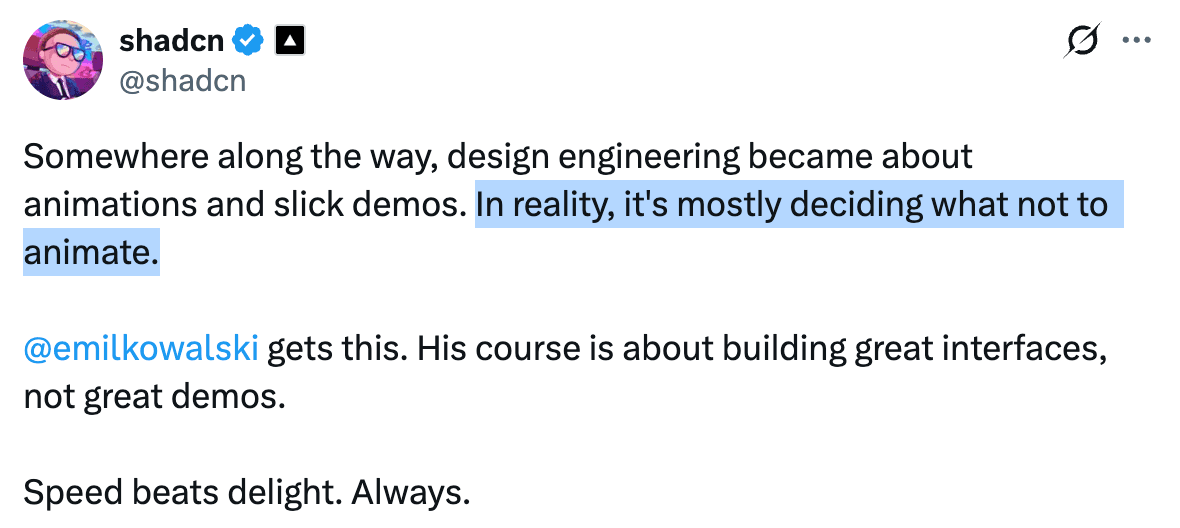
Knowing what not to animate is as important as knowing what to animate.

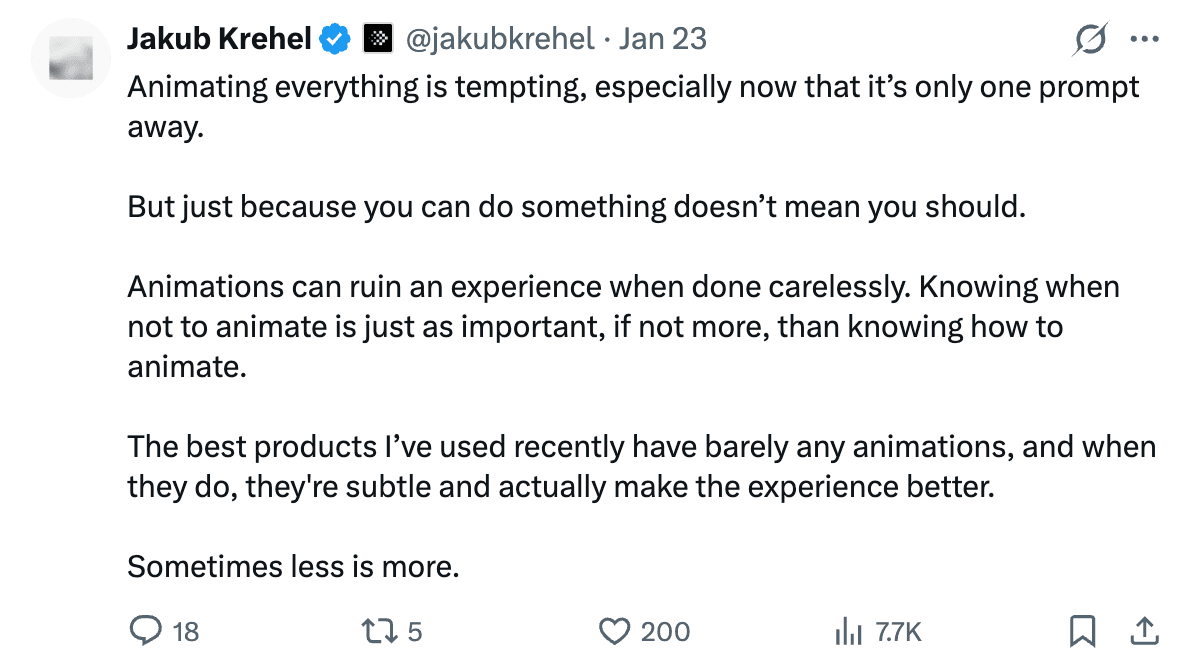
Just because you can do something doesn't mean you should.